

Robin Taylor is Associate Head of St Pauls Nursery School and Children’s Centre and a Specialist Leader in Early Mathematics. He is professional development lead for the NCETM’s Early Years Programme in Somerset and facilitates the Maths Network for Bristol and Beyond Stronger Practice Hub. Robin is obsessed with Block Play and is currently working with Bristol University PHD student Michael Rumbelow in researching block play at St Pauls.
Adventures in Block Play – Part 2 by Robin Taylor
In this two-part series, Robin reflects on the ‘language’ of block play- how children’s exploration reveals deep mathematical thinking, and how adults can nurture that understanding through environment, observation and talk. You can read Part 1 here.
The Adult Role in Block Play
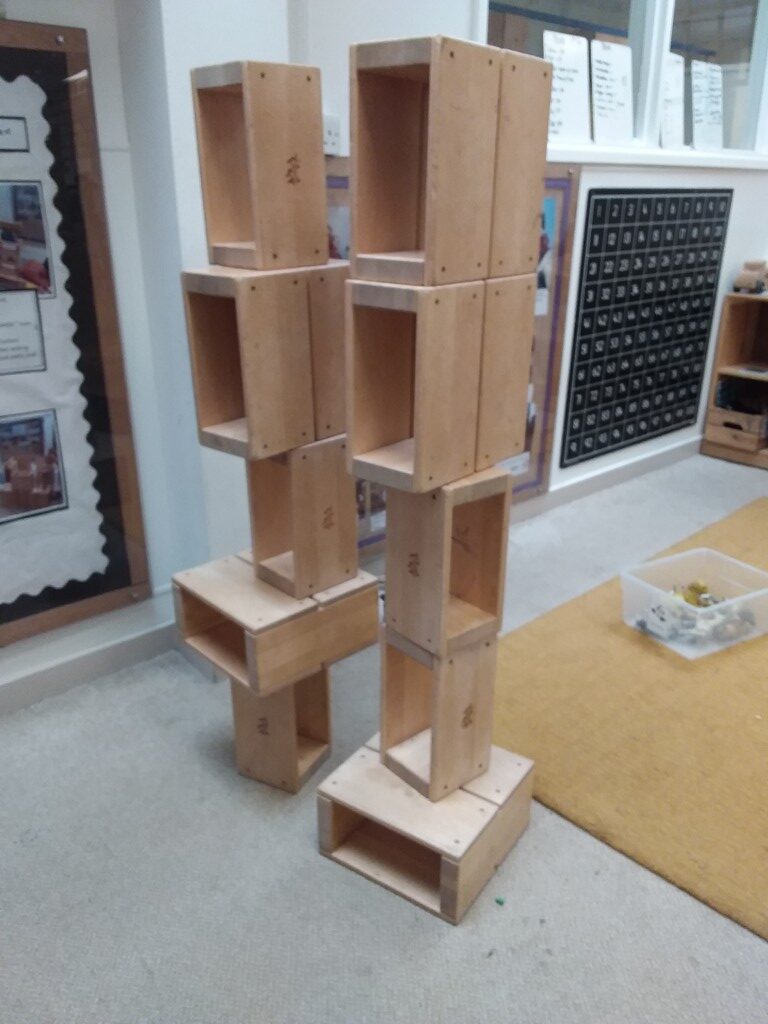
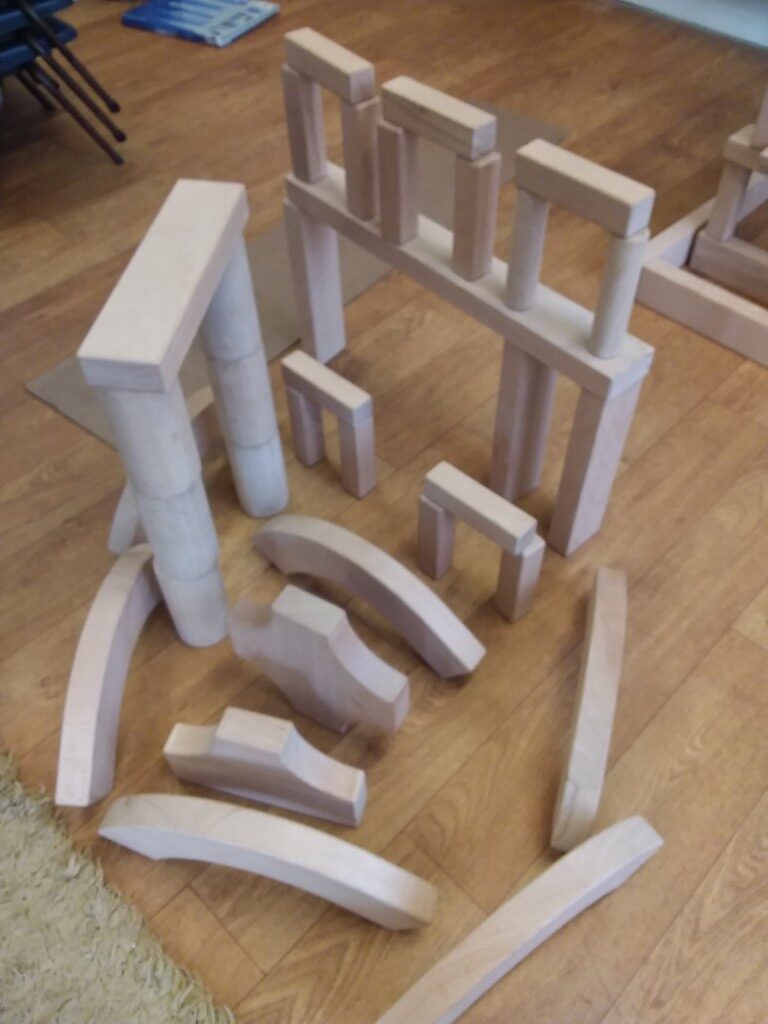
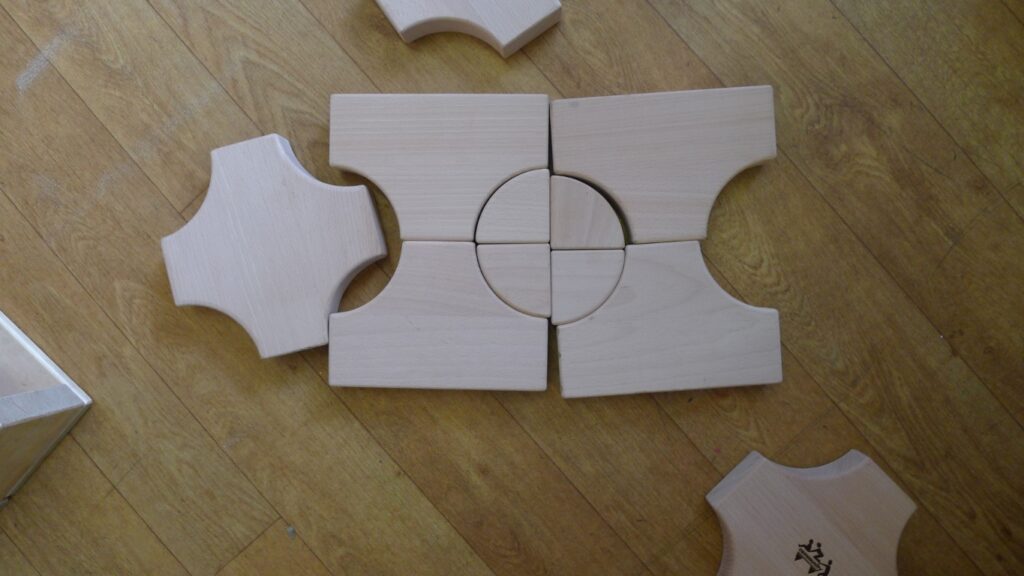
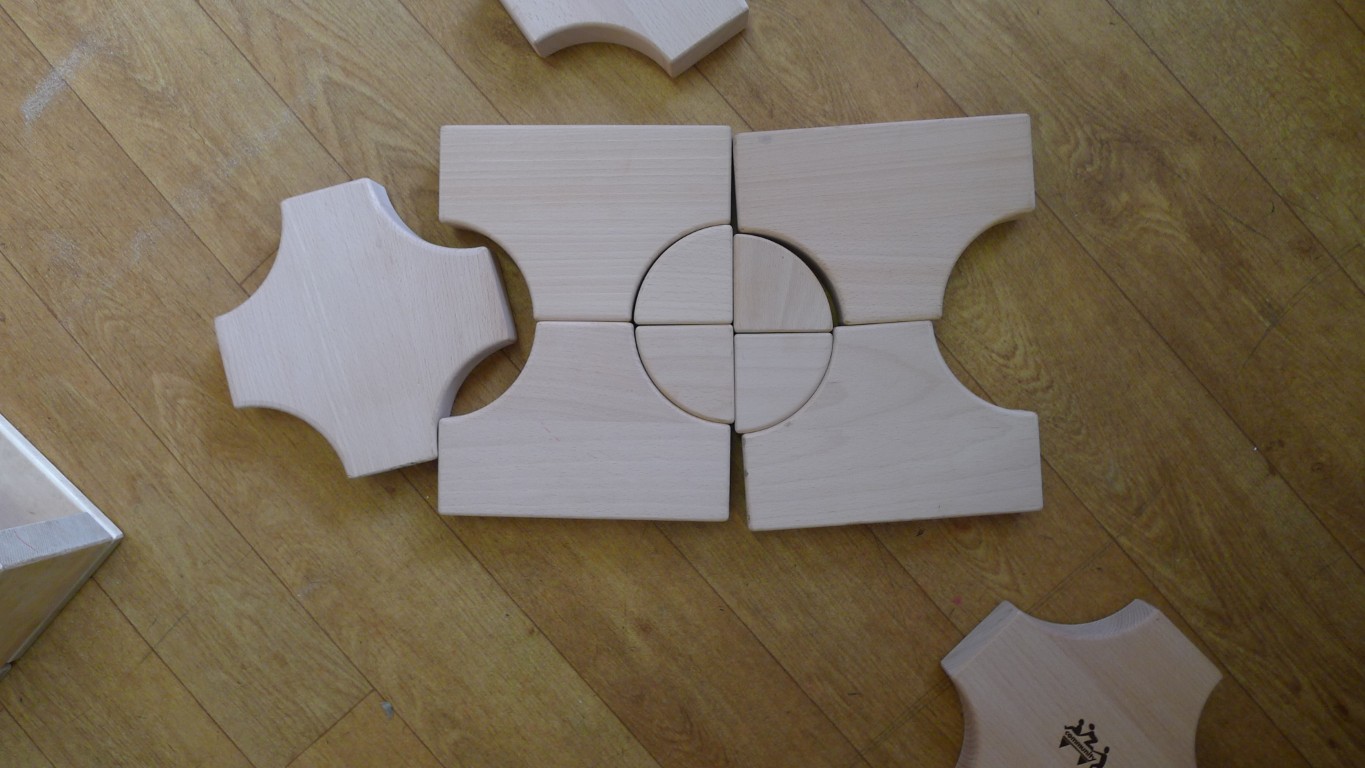
So, what is the best way to “be” and “act” alongside children in Block Play?
We can think about how positive relationships and enabling environments interact with each unique child to support learning and development, can’t we?
We can also think about how adults model, show, explain, demonstrate, encourage, question and narrate learning – just like OfSTED’s definition of teaching!
So what does this mean when supporting learning in Block Play?
We have found that we need to be what Community Playthings call an active observer – carefully observing interactions and interests, possibilities and problems – ready to question, suggest and scaffold learning.
This exploration also reflects the EEF’s approach to facilitating mathematical language, as we model and extend children’s talk around attributes, position and quantity, helping them verbalise their mathematical ideas
We have found that we need to introduce the blocks during small-group times, giving children intimate opportunities to explore and examine them.
Here, the children can explore and examine the properties and attributes of the Blocks – talk about and experiment with these new materials, sharing and discussing what they are doing and learning from each other as well as the adult.
During this ‘introductory’ period, children also begin to become familiar with the names and labels of the Blocks – unit, double, quadlong, arch, small ramp, and double pillar. These names and labels “signpost” children to not only the properties and attributes of individual blocks but also how they relate to each other.
After all, it is said ALL of mathematics is the search for relationships and patterns!
Creating a “Mathematical Palette”
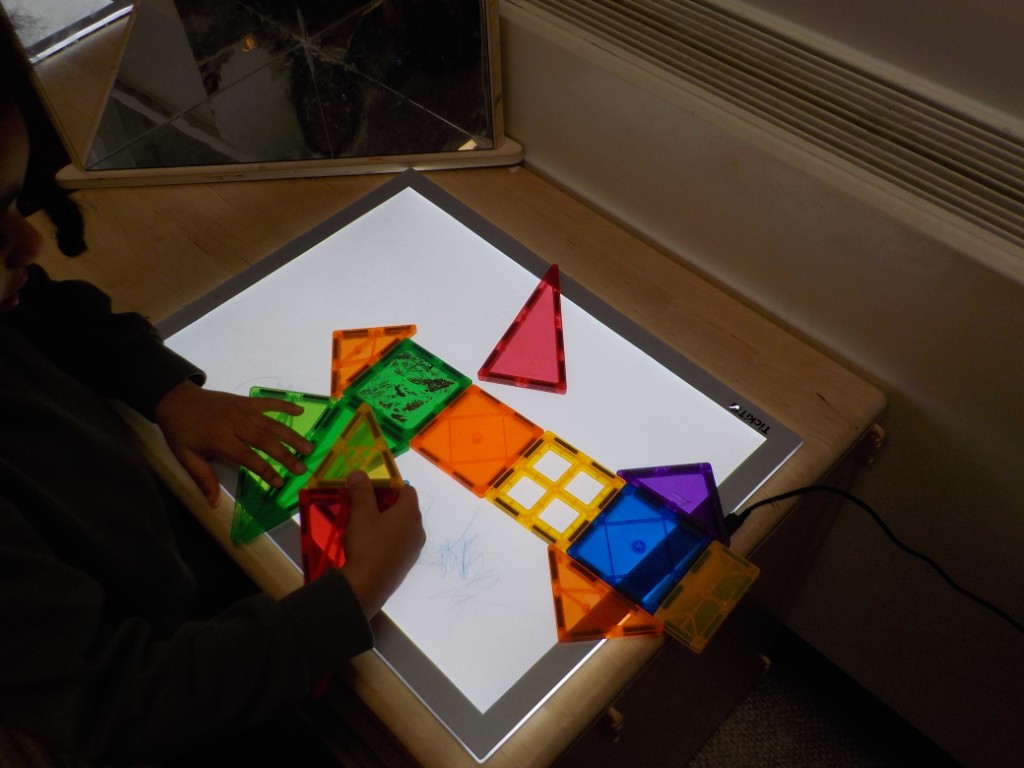
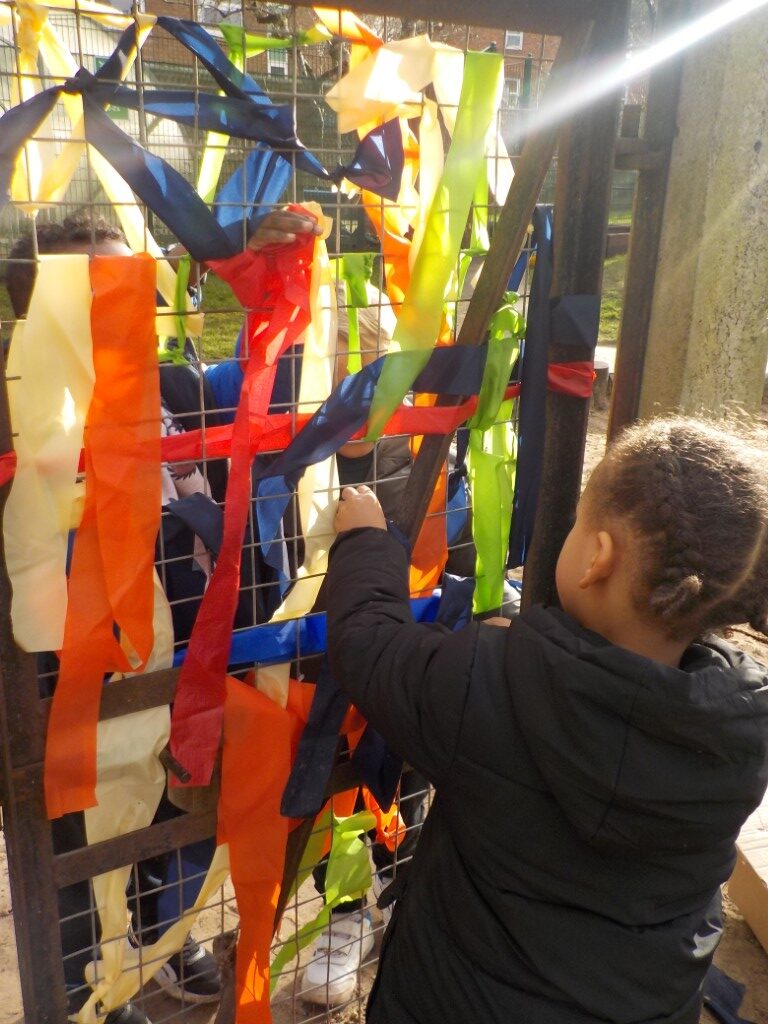
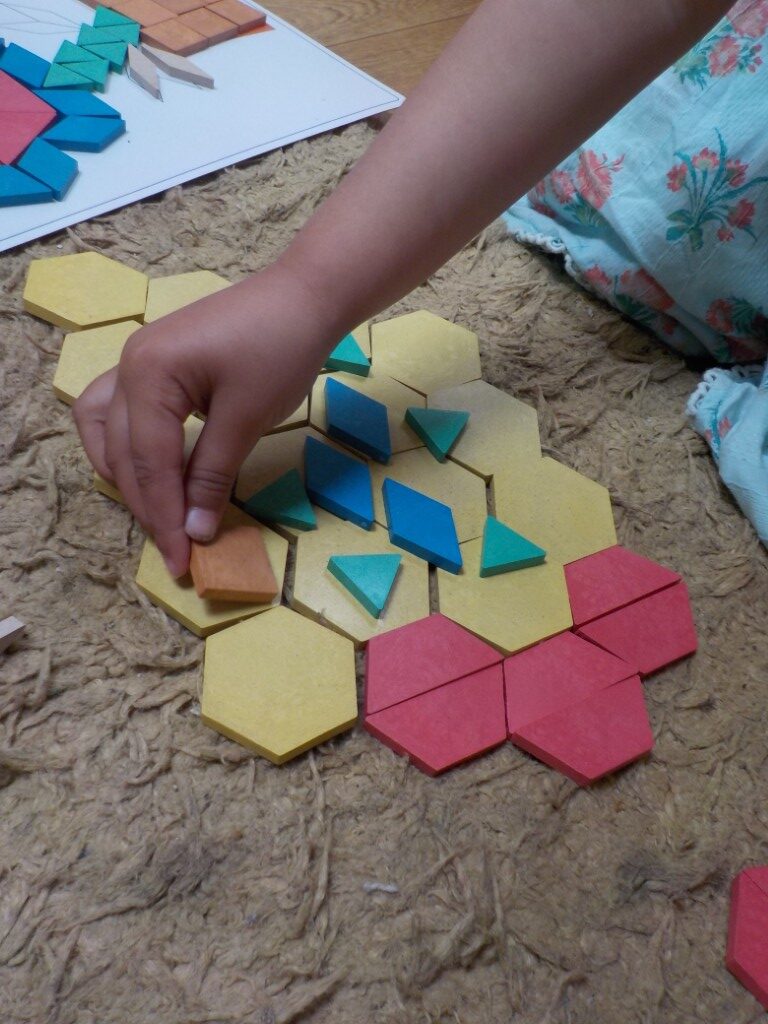
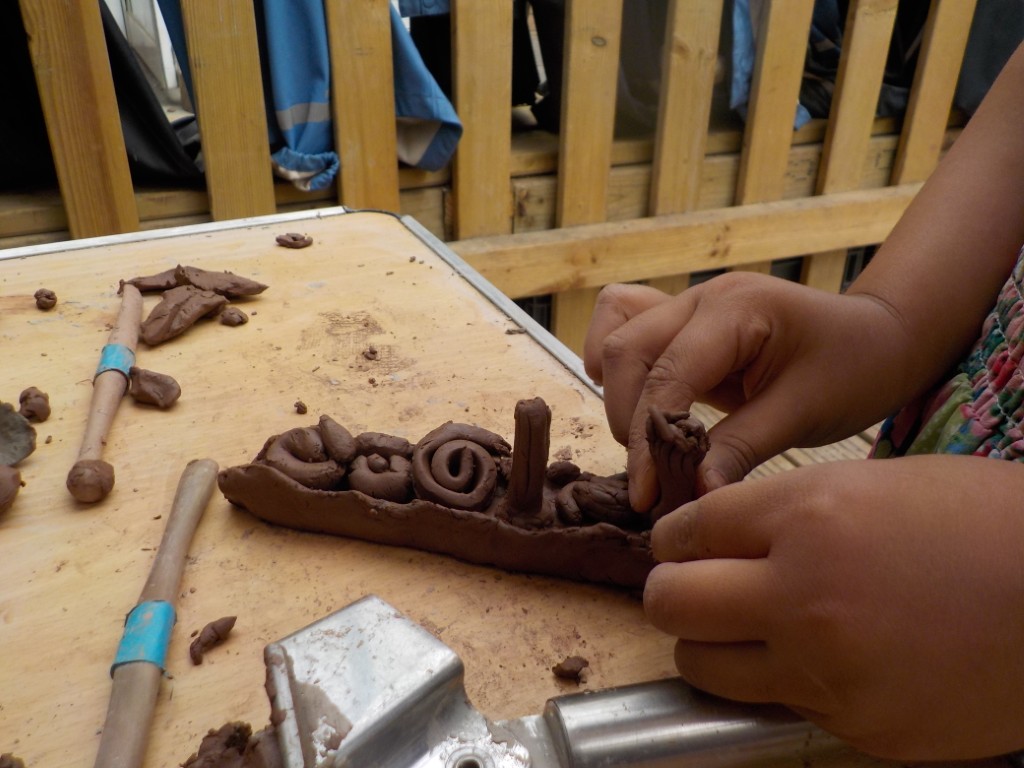
At St Pauls, we have also considered those experiences that will support children’s confidence and fluency with Block Play.
We have called this our “Mathematical Palette” – that is, how we “mix up” and “mix in” all the different experiences children have that are rich with mathematical potential.
So we think that Big Bold Movement outside – as children climb and balance, push and pull themselves and objects and materials around, use bats and balls and hoops and beanbags, and carry mud, sand, and water – helps develop spatial reasoning and adds to their “mathematical palette”.
So we think that pattern play – with dominoes and dice, with pegboards and puzzles, with geoboards and threading, with numicon, cuisenaire and unifix, with painting and printing, with pattern walks and pattern spotting – also adds to their “mathematical palette”.
So we think playing with shapes – with designing and making with cardboard boxes and scrap materials, with loose parts and found objects, with cutters and tools in clay and playdough, with tangrams and pattern blocks – helps develop spatial reasoning and adds to their “mathematical palette”.
What we have found is that children who become absorbed in these mathematical materials and experiences then translate this learning into their Block Play, which in itself becomes increasingly complex, filled with pattern and comparison, composition and transformation.
This is also informed by the EEF’s approach to teaching problem-solving skills for maths, which emphasises encouraging children to reason, test ideas and make predictions through hands-on exploration.
For us, here at St. Pauls, we have come to understand how important the key concepts of pattern, attributes, comparison and change are to early mathematical understanding.
These are what the Erikson Institute calls Precursor Concepts – concepts that act as the firm foundations to lifelong mathematical thinking.
The ideas of pattern, attributes, comparison and change have helped us design and structure our maths-rich environment – and our Block Play spaces – to ensure children experience them through visual and tangible first-hand experiences with all sorts of materials that make these concepts obvious and explicit.
Creating and Curating – Making the ‘Best’ Block Play Area

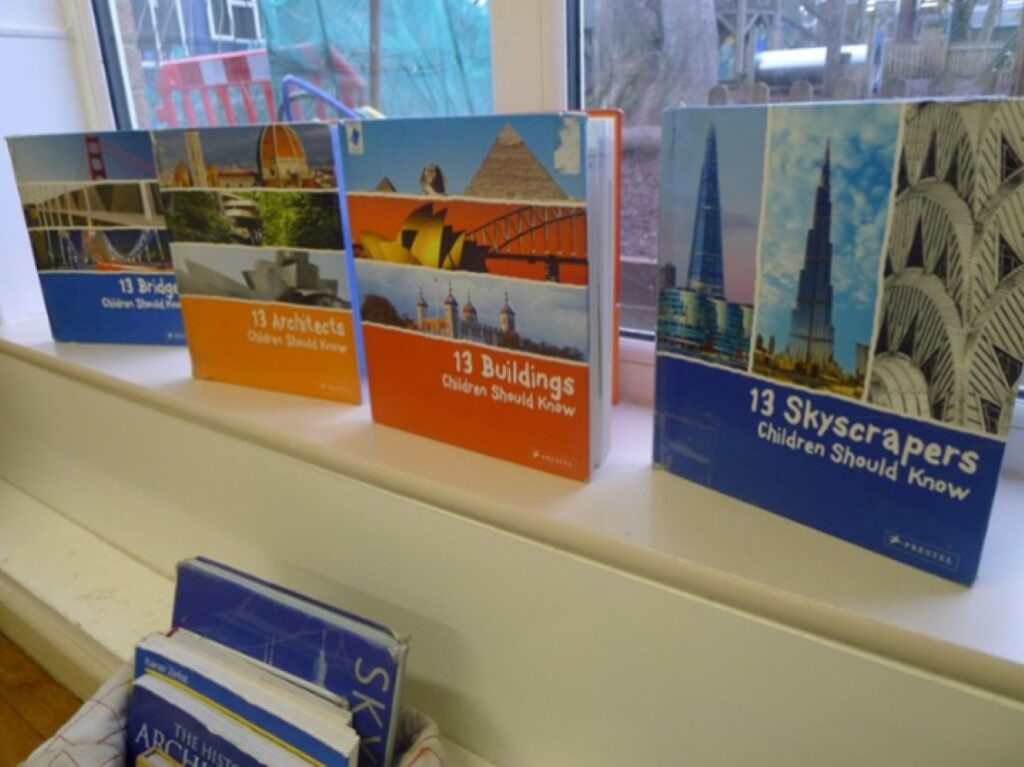
What’s in your Block area?
We have spent a long, long time building up our resources, materials and tools.
And spent a long time together, noticing, talking, thinking, and reflecting on how children are responding to the materials and developing their Block Play with increasing depth, breadth, and complexity.
Our Block Areas are full of Community Playthings blocks, clearly labelled on shelves which house them according to their relative sizes and dimensions.
Half-units, units, doubles and quadlongs are placed adjacent to each other so children can see the relationships they have to each other. In doing so, we’re designing environments that make mathematical relationships visible and tangible, echoing many of the principles highlighted across the EEF’s Early Mathematics approaches, helping children to see, feel and describe connections in the materials around them.
Our Block Play is full of other bits of wood – irregular offcuts, logs and branches – all cut to various sizes – so children can develop irregular language to describe attributes – sharp, zig-zag, wavy, in-out, pointy, “sort-of-like-a”!
Our Block Play borrows from Montessori materials to support children in developing those abstract ideas of length, weight, height, and number from concrete forms – pink towers, brown stairs, red rods, and constructive triangles.
Our Block Play is also full of wooden stacking toys – those sometimes lurid rainbow-coloured stacking semi-circles or rainbow arches or triangles, squares, rectangles.
These we think highlight ideas around properties and attributes, composition and comparison, transformation and equivalence.
Our Block Play is not only full of mirrors or vehicles, small world or scrapstore loose parts but also full of books on buildings and architecture, art and design – with children so readily inspired and ignited to recognise, visualise and represent these structures in blocks.
So we find our Block Play materials and resouces provoke all sorts of unique and varied constructions, structures and representations. They provide the children with that real, tangible experience of making their thinking visible and concrete – right there in front of them.
What will you put in your Block Area?
Onwards and Upwards – Learning the ‘Language’ of Blocks Together
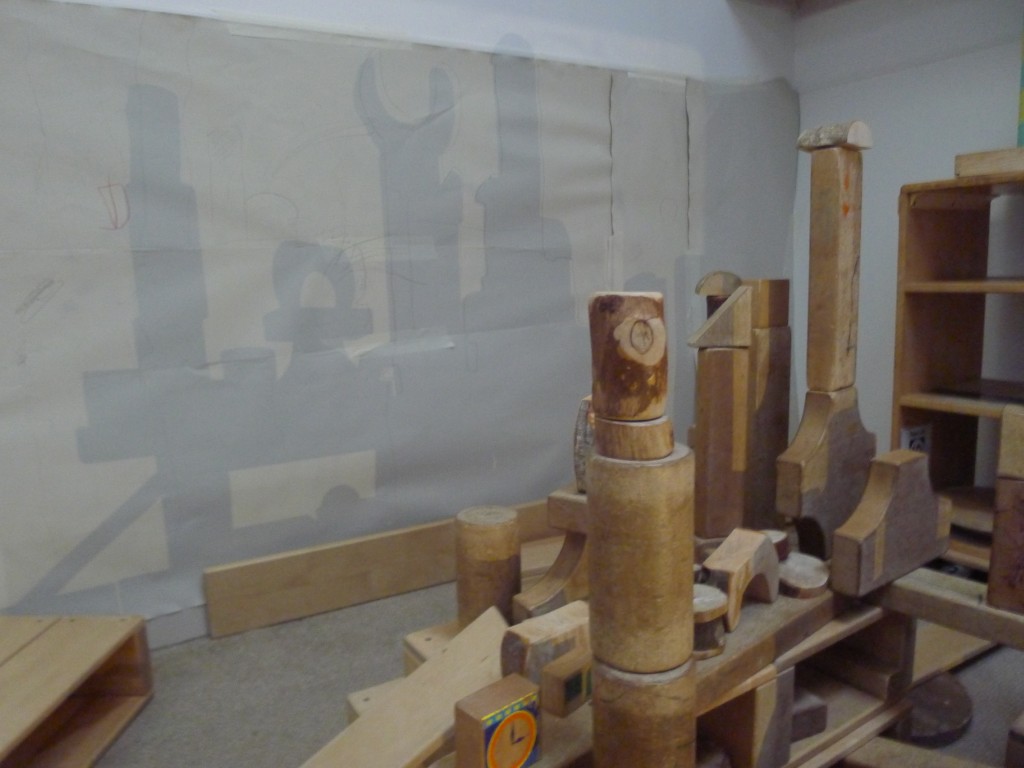
We remain keen to learn!
From children, of course, but also from each other and our wider early years community.
We are still learning the full breadth of the ‘language’ of Block Play.
We have questions around gender differences and equality of opportunity in Block Play.
We have hypothesised about the impact of prolonged Block Play on the development of children’s number sense and numerosity.
And we are keen to find ‘best practice’ when we consider how to document children’s learning – for the children themselves, but for parents and practitioners alike.
We have been playful with technology in recording block structures and reproposing them to children by allowing them to manipulate the images on a screen, to show different perspectives and viewpoints, positions and appearances.
Does this kind of documentation amplify and augment children’s mathematical knowledge, skills and understanding?
We are really keen to learn from our youngest children too!
How do we best build upon their natural, inborn, intuitive mathematics?
How does Block Play – and all the other aspects of our “mathematical palette” – help them build upon their natural maths to create those firm foundations for mathematical success?
“Researching children researching the world” is a maxim from the Reggio Emelia schools in northern Italy.
And here at St Pauls Nursery School and Children’s Centre, we have been doing just that!
References
Community Playthings. The important role of the teacher in block play [Video].
https://www.communityplaythings.com/resources/videos/the-important-role-of-the-teacher-in-block-play
Early Childhood Maths Group. Spatial Reasoning Toolkit.
https://earlymaths.org/spatial-reasoning-toolkit/
Erikson Institute Early Math Collaborative. Precursor Concepts.
https://earlymath.erikson.edu/why-early-math-everyday-math/precursor-concepts/
Education Endowment Foundation (EEF). Improving Mathematics in the Early Years and Key Stage 1 [Guidance report].
https://educationendowmentfoundation.org.uk/education-evidence/guidance-reports/early-maths
Education Endowment Foundation (EEF). Early Years Evidence Store – Teaching and Modelling How to Make Comparisons and Connections.
https://educationendowmentfoundation.org.uk/early-years/evidence-store/early-mathematics/teaching-and-modelling-how-to-make-comparisons-and-connections
Join Our Free Webinars and Events for Expert Guidance and Practical Support
To find out more about this evidence-informed approach and see it in real-life practice, you can attend our upcoming early maths events through the Bristol & Beyond Early Years Stronger Practice Hub.