

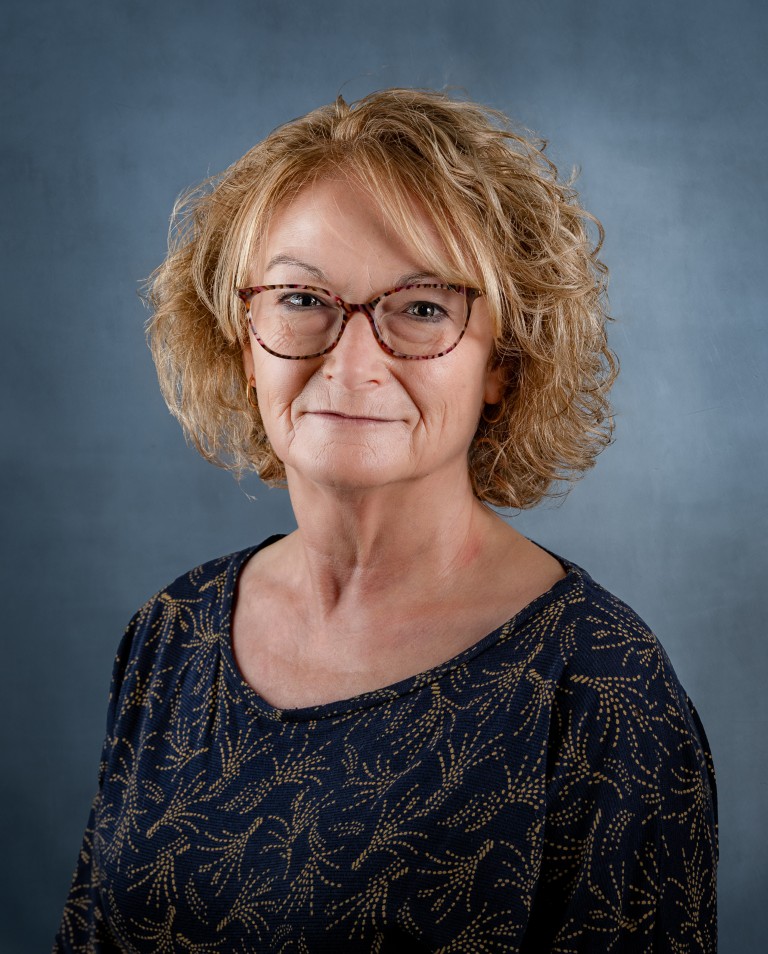
Ruth Glover is the Chief Executive Officer of Springboard Opportunity Group, a specialist early years provider for young children with special educational needs and disabilities. With more than ten years’ strategic leadership experience as Head of Early Years for a local authority, and lead adviser for Inclusion in Early Years, as well as direct leadership experience as Headteacher of a small independent primary school, Ruth brings a compassionate and values-led focus to leadership thinking. Ruth began her career in education as a childminder and then Reception Teacher in an area of high deprivation, where she developed her passion for making a difference in children’s lives.
The Sensory Side of Behaviour: Rethinking What Children in the Early Years Are Telling Us by Ruth Glover
When a young child crawls under a table during group time, refuses certain foods, or becomes distressed in a busy room, we often describe the behaviour as “challenging”. In early years settings, these moments can feel demanding, especially when routines matter and time is limited. But what if, instead of asking “How do I manage this behaviour?”, we asked, “What is this child experiencing through their senses?”
For children in the early years, behaviour is often communication. Understanding sensory processing can help us interpret that communication more accurately and respond in ways that support regulation, inclusion and learning.
Understanding sensory processing in the early years
Sensory processing describes how the brain receives, organises and responds to information from the senses. In early childhood, this includes not only sight, sound, smell, taste, and touch, but also vestibular (movement and balance), proprioceptive (body awareness), and interoceptive (internal sensations such as hunger, tiredness, or emotional discomfort).
Children process sensory information differently from adults and from one another. Some notice sensory input quickly and may feel overwhelmed by noise, light or touch. Others seek movement, pressure or strong sensory input to feel calm and organised. Some may not register sensory input unless it is intense. These differences are a normal part of development, but can strongly influence how children cope in early years environments.
Our understanding of these differences is informed by the work of psychologist Winnie Dunn, who developed a framework explaining how people respond to sensory experiences. Dunn’s model is based on two ideas: how much sensory input a person notices and how they respond to it. From this, she identified four sensory response patterns that help us understand behaviour — not to label children, but to support them more effectively (Dunn, 1997).
Much sensory-informed practice in early years settings also draws on guidance from Griffin OT, who provide occupational therapy training and resources for schools and families. Alongside Dunn’s framework, many practitioners use the Pyramid of Learning, which shows that children need a stable sensory base before developing coordination, emotional regulation and attention (Williams & Shellenberger, 1996).

When sensory needs show up as behaviour
Sensory differences often present as behaviours adults find challenging:
- A child who avoids carpet time may feel overwhelmed by noise, light or closeness to others.
- A child who constantly moves, climbs, or crashes may be seeking movement or deep pressure.
- A child who becomes suddenly tearful or angry may struggle to recognise hunger, tiredness or emotional overload.
Without a sensory-informed lens, these behaviours risk being misunderstood as defiance rather than signals of need.
What does the evidence and guidance say?
The Statutory Framework for the Early Years Foundation Stage highlights that children develop at different rates and identifies self-regulation, physical development and personal, social and emotional development as foundations for learning (DfE, 2024). Sensory-informed practice directly supports these areas.
The SEND Code of Practice (0–25 years) emphasises early identification of need and encourages practitioners to look beyond behaviour and consider underlying causes, adapting environments and approaches accordingly (DfE, 2015).
Evidence summarised by the Education Endowment Foundation also shows that children need adult support to develop self-regulation before they can fully engage in learning (EEF, 2021). Sensory frameworks such as Dunn’s model and the Pyramid of Learning complement this guidance by offering practical ways to understand individual differences.
What can settings do differently in practice?
For young children, sensory regulation is closely linked to routines, relationships and responsive adults.
Food and mealtimes
Offer a choice of textures and allow familiar foods alongside new ones. Seat children where they feel comfortable (including slightly apart if smells or noise feel overwhelming) and keep mealtimes calm and unrushed.
Light, noise and the environment
Create quiet, cosy spaces with softer lighting, reduce visual clutter at child height, and use predictable routines with gentle transitions.
Movement and calming the body
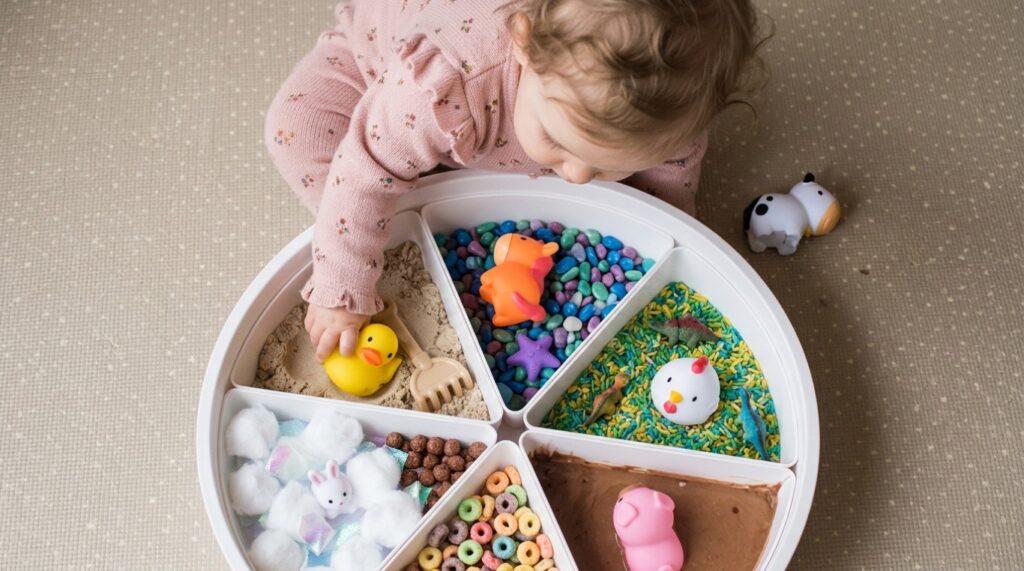
Many young children need movement or deep pressure to feel settled. Settings can include pushing, pulling or carrying play, supervised weighted items such as a small lap blanket or backpack, and calming activities like playdough or wrapping in a blanket with an adult.
Personal space
Allow children to choose where to sit, offer flexible seating options, and support gradual participation during group times.
Reflective prompt for practice
Pause and reflect
Is there a time in your day when children regularly become unsettled?
What sensory demands might be present, and what one small change could reduce them?
A final reflection
For young children, behaviour often tells us that something feels too much, too fast or unfamiliar. When we respond with curiosity rather than correction, we help children feel safe, understood and ready to learn.
Small adjustments to environments and routines can make a meaningful difference. Sensory-informed practice strengthens inclusive provision and supports every child in exploring, playing and thriving.
References and further reading
Department for Education (2015). Special educational needs and disability code of practice: 0 to 25 years. London: DfE and Department of Health.
Department for Education (2024). Statutory framework for the early years foundation stage. London: DfE.
Dunn, W. (1997). The impact of sensory processing abilities on the daily lives of young children and their families: A conceptual model. Infants & Young Children, 9(4), 23–35.
Education Endowment Foundation (2021). Improving self-regulation and executive function in the early years. London: EEF.
Griffin, J. (n.d.). Griffin OT: Occupational therapy resources and training. Retrieved 30 September 2025, from https://www.griffinot.com
Williams, M. S., & Shellenberger, S. (1996). How Does Your Engine Run?® A Leader’s Guide to The Alert Program for Self-Regulation. Albuquerque, NM: TherapyWorks, Inc.
Join Our Free Webinars and Events for Expert Guidance and Practical Support
To find out more about this evidence-informed approach and see it in real-life practice, you can attend our upcoming PSED Network events through the Bristol & Beyond Early Years Stronger Practice Hub.
Please Note: This session is part of what will be regular termly PSED regional networking sessions. So it will involve some CPD and then networking/ discussion time. Participants are encouraged to discuss their learning, what they have or will put into practice, successes and challenges from their settings, and what you'd like future sessions to cover as we build this learning community.
View Tickets