

Gwyneth Keen is an early childhood professional with 25 years’ experience in leadership and management, including seven years as an Ofsted Inspector, DfE expert and mentor, and Lead Practitioner for a Local Authority. She has contributed to five Outstanding Ofsted judgements at her setting and holds a degree in Childhood and Youth Studies, alongside a Master’s degree in Psychology and a Master’s degree in Early Years Professional Studies.
Growing up in rural North Wales shaped her deep understanding of childhood, resilience and the influence of environment. Her own journey through motherhood, education and reflection has strengthened her passion for supporting children, families, leaders and practitioners to understand how early experiences shape development, wellbeing and lifelong potential.
Story Time Isn’t Just Reading… It’s Connection, Safety and Healing by Gwyneth Keen
What if one of the simplest things we do with children every day could also be one of the most powerful? Not a complicated intervention. Nor another resource to add to the planning.
Just a story.
The Education Endowment Foundation (EEF) highlights the importance of shared reading, storytelling and high-quality interactions in developing communication and language.
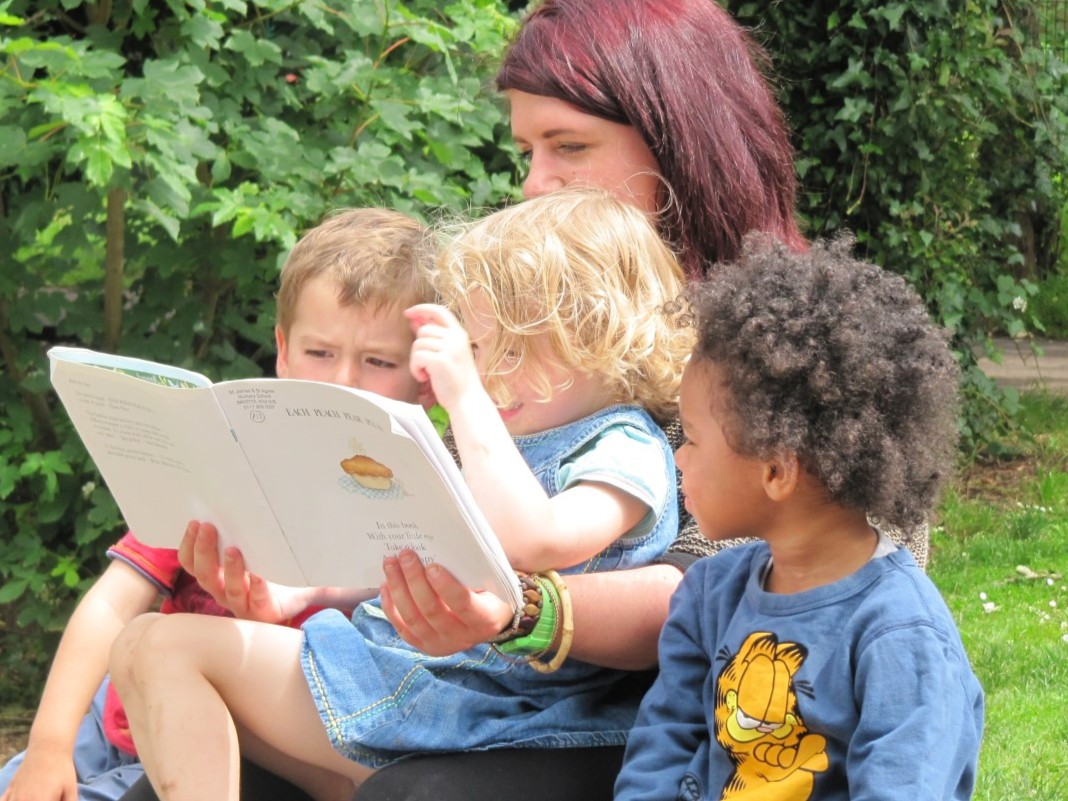
For young children, how they feel is closely connected to how they learn. When children feel safe, connected and emotionally secure, they are better able to explore, communicate, play and learn. Story time can be a time to slow down, to sit close, to listen and to simply be together. And sometimes, that is exactly what a child needs.
More Than a Book: The Power of Connection
For children who find the world overwhelming, predictable experiences can offer reassurance. When we return to familiar stories, we offer children something they can anticipate and trust. We are creating relationships and environments where children can feel safe enough to grow.
As the EEF emphasises, it is not simply the activities we provide, but how we engage with children that makes a difference.
These seemingly small moments communicate something important:
You belong here. I have time for you. You matter.
Imagination Isn’t Just Escaping
We sometimes think of imagination as an escape from real life. For young children, it can be something much more meaningful.
Through stories, children can explore experiences and emotions they cannot yet articulate, giving shape to fear, loss, uncertainty and hope. Characters offer mirrors, possibilities and reassurance: fear can become courage, being lost can lead to being found, and difficult feelings can change.
This is the quiet power of a trauma-informed approach: stories help children understand that what they feel is real, but it does not have to last forever. Stories give those experiences a beginning, a middle and an end.
What they feel is real, but it does not have to last forever.
Stories as a Window into Feelings
Stories can also help children develop empathy. When we talk about how a character might be feeling, children begin to think beyond their own perspective.
A child may repeatedly choose the same book, act out a particular scene or comment on a character’s feelings. We should resist the temptation to assume we know what this means. Instead, we can make space for their curiosity. Shared reading is not just about delivering a story. It is about creating opportunities for children to think, communicate and make meaning.
When Big Feelings Find a Story
One of my favourite examples of this is Where the Wild Things Are by Maurice Sendak.
Max feels angry, is sent to his room and escapes into an imagined world where he becomes king of the Wild Things. Yet, after his adventure, he wants to return home. His dinner is waiting for him.
There is something deeply reassuring about this ending. Max has experienced enormous feelings, but those feelings have not made him unlovable. He can be angry, imaginative and overwhelmed, and still return to the security of home.
Max has experienced enormous feelings, but those feelings have not made him unlovable.
For young children, stories like this can create space to explore difficult emotions without anyone telling them that those emotions are wrong.
Making Story Time Meaningful
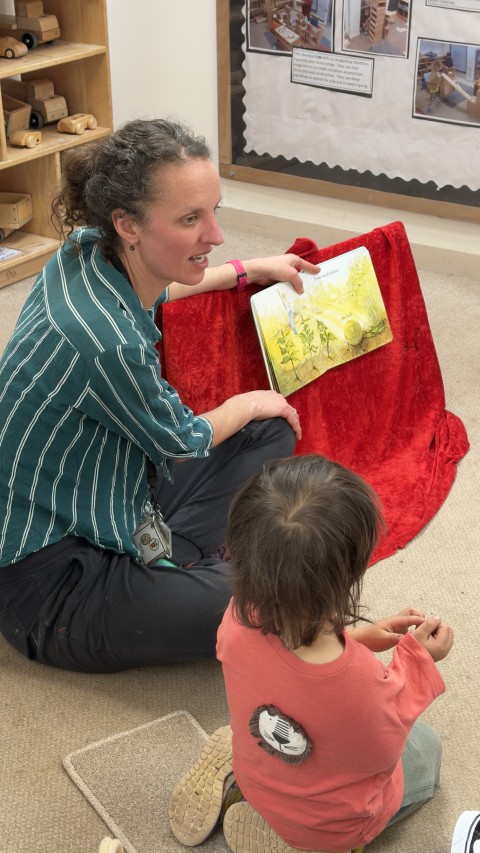
Creating meaningful story time doesn’t require expensive resources or complicated planning. It starts with being present.
- Find a familiar space.
- Create a routine.
- Give children time to settle.
- Ensure the room is quiet, and staff don’t use the opportunity to tidy up.
- Allow children to return to the same story, even when you have read it twenty times before!
Sometimes, the most valuable thing we can do is read slowly, listen carefully and allow a child to lead.
A Moment to Reflect
For early years practitioners, perhaps the deeper question is not simply whether we read to children every day, but what children experience when we do.
Story time should not expect one way of listening, participating or learning. Inclusion means making space for movement, observation, silence, repetition and different ways of thinking. When children return to the same story, they are deepening understanding, finding comfort, building language and exploring the world in their own way.
And isn’t that what we want for children?
To feel safe enough to be curious. Safe enough to make mistakes. Safe enough to have big feelings. And safe enough to know that an adult will still be there.
Final Thought
Story time will not replace specialist support, and its emotional benefits should not be assumed for every child. Yet, when we root it in sensitive relationships and thoughtful interactions, it can become much more than another activity on your planning sheet.
That is the quiet power of story time. It isn’t just reading. It is a moment of connection. A moment of safety. A moment to imagine, process and make sense of the world. And sometimes, in the simplest and most ordinary moments, that can be healing.
When a child sits beside us for a story, are we simply reading to them, or are we showing them that they do not have to face the world alone?
Further Learning
Practice Bite: Books, Belonging and Representation – a one-hour team reflection session designed to help practitioners explore the messages books communicate about identity, belonging and representation, and consider how book provision can be shaped in ways that are meaningful, engaging and authentic for children.
References
- Bowlby, J. (1969). Attachment and Loss: Vol. 1. Attachment. New York: Basic Books.
- Boylan, J., Mitchell, F., & Brunsdon, R. (2023). Developing trauma-informed approaches in education. University of Huddersfield.
- Buchsbaum, D., Gopnik, A., Griffiths, T. L., & Shafto, P. (2012). Children’s imitation of causal action sequences is influenced by statistical and pedagogical evidence.
- Department for Education. (2024). Best Start in Life: research review for the EYFS.
- Education Endowment Foundation. (2018). Preparing for Literacy: Improving Communication, Language and Literacy in the Early Years. London: Education Endowment Foundation.
- Higgins, S. et al. (2017). Sutton Trust – Education Endowment Foundation Early Years Toolkit: Early literacy approaches.
- Kangas, M. (2023). Imagination and playful learning in early childhood education: Fostering creativity, engagement and wellbeing. Early Child Development and Care.
- Public Health Wales. (2015). Adverse Childhood Experiences (ACEs) study. phw.nhs.wales/topics/adverse-childhood-experiences
- Sadeh, A., & Bamberger, H. (2024). Adaptive and maladaptive use of imagination in childhood: A developmental perspective. Journal of Child Psychology and Psychiatry.
- Sendak, M. (1963). Where the Wild Things Are. Harper & Row.
- Subbotsky, E. (2010). Magic and the Mind: Mechanisms, Functions, and Development of Magical Thinking and Behaviour. Oxford University Press.
- Wohlwend, K. E. (2023). Playing to Learn: The Role of Fantasy and Imagination in Early Childhood Classrooms. Teachers College Press.