


Leila Garau Taylor has worked in early years since 2010, when she joined a nursery school in Madrid (Spain), teaching English as a foreign language to 2 and 3 year olds. This experience inspired her to study her level 3 qualification in childcare, and to pursue a nursery practitioner role when she moved to Bristol in 2012. Ever since, Leila has been passionate about working with children and their families in Archfield House Nursery. Her role is Reflective Practice Lead and DSL. Her key motivations are attachment theory, the importance of attuned care, and advocating for social and environmental justice.
Privacy and Safeguarding During Intimate Care by Leila Garau Taylor
From September 2025, the EYFS safeguarding and welfare requirements were updated to state that providers “must ensure children’s privacy is considered and balanced with safeguarding and support needs when changing nappies and toileting.” In this blog, Leila explores what this means in practice, considering how early years professionals can balance children’s dignity, privacy and safeguarding during intimate care routines.
Intimate care routines provide wonderful opportunities for warm, positive one-to-one interactions between practitioner and child, while supporting children to develop increasing independence. They can also be moments when a child makes a disclosure or a practitioner notices signs that raise a safeguarding concern. Because intimate care involves supporting children at their most vulnerable, children’s privacy must always be carefully balanced with appropriate safeguarding arrangements, particularly for children with SEND.
To achieve this, it’s crucial to honour every child’s right to feel safe and comfortable with the adults assisting them with intimate care and in the environments where it takes place.
But what exactly does privacy mean here?
Privacy can be defined as the right to keep one’s matters and relationships secret; or, the right to be alone and do things without other people seeing, hearing or disturbing you.
Babies and young children need our assistance to achieve personal hygiene, and so providing privacy in the sense of being alone, unseen and/or unheard by others is not necessarily possible, nor in the child’s best interest.
It is also worth reflecting that shame and self-consciousness around nudity and bodily functions are learned rather than inherent. Most children commonly have no reservations about taking their clothes off in front of others, may often accompany a parent or sibling to the bathroom, share bath-time, or prefer to use the potty alongside a peer.
Therefore, in the context of babies and young children, we could consider privacy not so much as the need not to be seen or disturbed, but rather as the right to maintain one’s dignity when having intimate care needs met, and for their feelings about the care they receive to be listened to and respected.
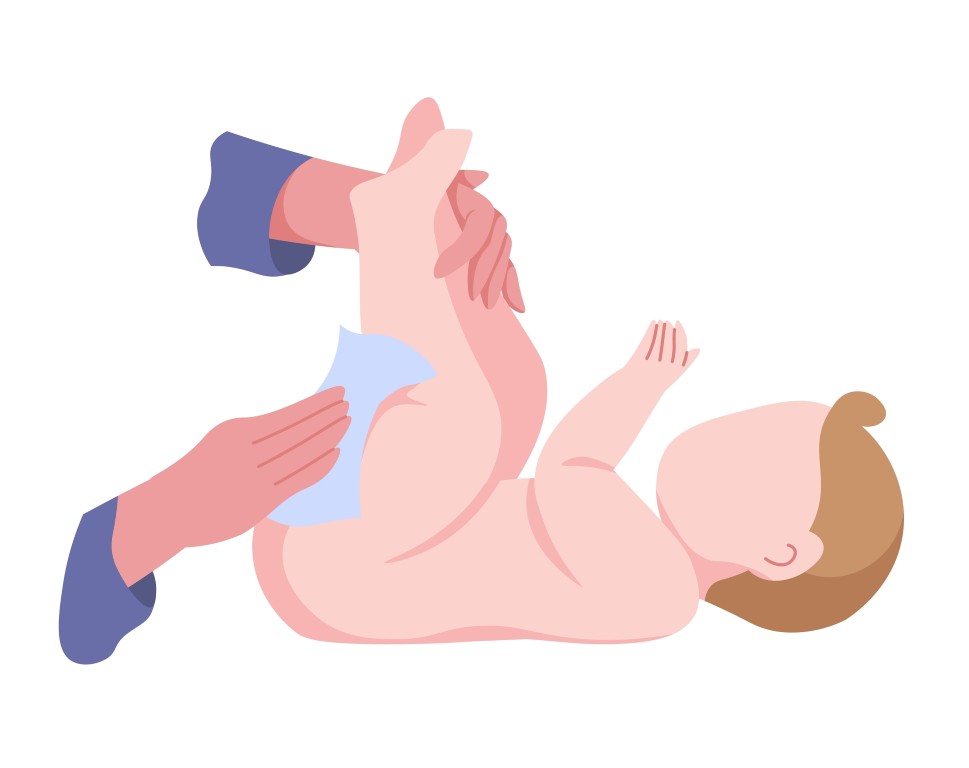
Promoting children’s dignity during intimate care
Dignity is about treating every child with respect and compassion. It links to our duty as practitioners to tune into each child individually and respond to their unique needs, stage of development, background and personality with professional love.
In the chapter about Care in Birth to 5 Matters, it states:
“To ensure that all physical interactions impart kindness and respect. Babies and young children first come to understand themselves through their bodies and understand much of what others think of them and how much they are loved and valued through touch and physical interactions.”
Through this lens, we not only ask, “Is this space too public to change a child’s clothes?” but rather, “Am I considering the child’s feelings and dignity before deciding where and how to change them into clean clothes?” It reminds us to treat children as the governors of their own bodies, which is crucial in helping them develop a strong sense of self-worth and self-esteem.
The Department for Education tells us about the importance of helping children gain a sense of self:
“Feeling safe and secure helps children develop their independence. […] Supporting children to understand diversity, including that others will have a different background or family type from themselves, will help all children to feel valued and understood. Sharing everyday experiences supports children’s understanding of how social interactions work.”
Toileting, nappy changes and developing self-care skills are everyday interactions through which children learn how respectful relationships work. By modelling consent, offering choices and helping children feel valued during these routines, we reinforce that everyone has a right to personal agency over their own body and teach children to respect the boundaries of others.
The EEF Early Years Evidence Store also highlights the importance of supporting children’s growing independence through everyday self-care routines. You can read more about promoting self-care in the Evidence Store.
What does this look like in practice?
As a starting point, we may want to reflect upon the following questions:
- When changing nappies and toileting, how do I maintain the child’s dignity?
- Do I know what my key children’s needs around privacy are? How do I share this information with my team to provide consistency?
- What is our team’s shared understanding of dignity and privacy?
- How do our safeguarding and intimate care policies and procedures reflect these values?
- How does the level of privacy offered during toileting teach children about personal boundaries?
- What is my approach to intimate care teaching children about consent and body autonomy?
Here are a few suggestions for providing privacy and dignity balanced with safeguarding and support needs:
- Teach children about respecting other people’s need for privacy in the toilet; close the cubicle door and knock first; create a red light/green light system for using the toilets.
- Offer comfortable changing areas (using child-height screens) away from busy thoroughfares.
- Ensure nappy changing areas promote calm and minimise distractions.
- Model asking for consent before changing children’s nappies or clothes, or ask which staff member they’d like help from.
- Explain the importance of personal boundaries around body parts and physical displays of affection.
- Grant babies and young children your full attention and tenderness during nappy changes, rather than going through the motions on autopilot or whilst talking to somebody else.
- Ensure open communication and accountability around nappy changes and toileting duties.
Reference list
- NSPCC – Intimate Care of Children
- Birth to 5 Matters: Non-statutory Guidance for the Early Years Foundation Stage
- EYFS Statutory Framework
- EEF Early Years Evidence Store (Promoting Self-care)
Join Our Free Webinars and Events for Expert Guidance and Practical Support
To find out more about this evidence-informed approach and see it in real-life practice, you can attend our upcoming events from our Working with Babies and Spotlight on Twos Networks through the Bristol & Beyond Early Years Stronger Practice Hub.