
Teaching Self-Advocacy Skills to Our Young Children Today to Change the Societal Attitudes of Tomorrow by Jenna Jefferies
For too long, compliance has been the only goal for children with developmental differences in education and society. In this blog post by Jenna Jefferies, she explores how teaching self-advocacy skills to neurodivergent and disabled children can empower them to communicate their needs and stand up for themselves. By presuming competence, explicitly teaching self-advocacy in early years settings, and creating spaces where children feel validated, educators can help shift societal attitudes from deficit-focused to celebratory-driven. Learn practical strategies for supporting children’s self-advocacy that will raise a generation confident in getting their needs met and create a more inclusive society that values neurodiversity.

Bristol Early Years Book Club: Nurturing a Community of Readers
The Early Years Book Club, a collaborative initiative in Bristol, invites early years practitioners to enhance their knowledge of children’s literature. Monthly themes foster dialogue and resources, such as books focused on feelings and race equality. The club promotes community and celebrates reading, offering valuable tools for enriching children’s learning experiences.

Mini INSET Session: Slow Pedagogy
This comprehensive staff meeting template provides early years settings with a structured approach to exploring and implementing slow pedagogy principles in their practice. Based on Alison Clark’s research and writing, the template guides teams through understanding what slow pedagogy means, identifying opportunities throughout the day for unhurried learning, and reflecting on specific aspects like mealtimes and storytelling. Complete with discussion prompts, practical activities, and follow-up suggestions, this one-hour meeting plan helps settings develop more attentive, child-centered approaches that value children’s natural rhythms and deeper learning experiences. The template is particularly useful for settings looking to move away from rushed routines and create more meaningful engagement with children.

Trauma Informed? Dispelling the Jargon and How You Can Make a Difference by Terri Mitchell
Explore the meaning behind common educational phrases like ‘Belonging Strategies’ and ‘Trauma Informed’ while discovering how to make a meaningful difference in children’s lives. Early years educator Terri Mitchell challenges us to shift our perspective on challenging behaviors and view them through a trauma-informed lens. Drawing from her extensive experience and training in Trauma Informed Schools, she explains how early childhood experiences shape brain development and why understanding trauma and attachment is crucial for every educator. This insightful post offers practical guidance on becoming an emotionally available adult who can positively impact children’s life outcomes.
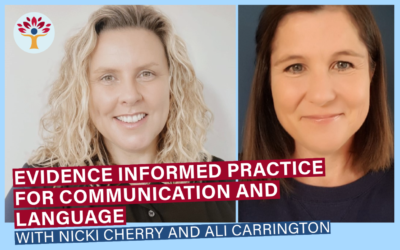
Webinar: Evidence Informed Practice for Communication and Language With Nicki Cherry and Ali Carrington
In this insightful webinar recording, Ali Carrington and Nicola Cherry explored the Education Endowment Foundation’s summary of evidence-informed approaches for early years education. They guided participants through practical reflections on implementing effective communication and language practices in early childhood settings.
Evidence Informed Leadership and PD Opportunities with other Hubs
Evidence-Informed Leadership Programme The Bristol and Beyond SPH is collaborating with the Somerset Research School to repeat a very well-received leadership programme. Using Evidence to Strengthen Your Early Years Leadership is a three-part training programme for...
Subscribe to our Bristol Early Years Teaching Hub Mailing List
Sign-up to receive news from Bristol Early Years Teaching Hub by email, including upcoming courses and events, links to additional resources, and more!